
What’s the Best Water Treatment System for My Home?
If you’ve started looking into water treatment systems, you’ve probably noticed one thing pretty quickly, everyone seems to have a different answer.
Some companies will tell you everyone needs a water softener. Others will push reverse osmosis systems or UV filtration. Online retailers will promise that one system does it all.
After 17 years working in water treatment, I can confidently say this:
There is no single “best” water treatment system for every home. The best system is the one that’s designed specifically for your water.
I’ve spent nearly two decades in homeowners’ basements, troubleshooting water problems, installing systems, and seeing just about every scenario imaginable. The homes might look similar on the outside, but the water inside can be completely different, even between neighboring properties in rural areas.
That’s why every recommendation should start with understanding your water first.
The Right System Depends on Your Water Source
The first question I ask every homeowner is simple: Are you on municipal water or well water? The answer completely changes what I recommend.
Municipal Water
For most homes on municipal water, I typically recommend a Chlor-a-soft system combined with a six-stage reverse osmosis drinking water system with a remineralizer.
A Chlor-a-soft unit provides two major benefits:
- Softens the water by removing hardness minerals like calcium.
- Removes chlorine from your household water.
That means less scale buildup on fixtures, cleaner dishes, softer laundry, and a noticeable improvement in bathing.
For drinking water, a six-stage reverse osmosis system with a remineralizer provides purified water while adding beneficial minerals back into the water for better taste.

Well Water
If you’re on a well, my recommendation changes immediately.
A UV filtration system is something I consider a must-have.
UV systems sterilize your water and protect against potentially harmful bacteria that can naturally occur in well water.
Beyond that, a proper water test determines whether you also need equipment such as:
- A water softener
- An iron filter
- Additional treatment depending on your specific water conditions
No two wells are exactly alike, which is why testing is so important.
Why Water Testing Should Always Come First
One of the biggest mistakes homeowners make is shopping for equipment before they know what’s actually in their water.
A professional water test tells us exactly what we’re working with. Without it, you’re simply guessing.
Many people assume they need the same system as their neighbor or buy equipment online because someone else recommended it.
The reality is your water can be completely different from the house next door, especially in rural areas.
Water testing allows us to properly size, select, and configure equipment based on your home’s actual water conditions instead of assumptions.
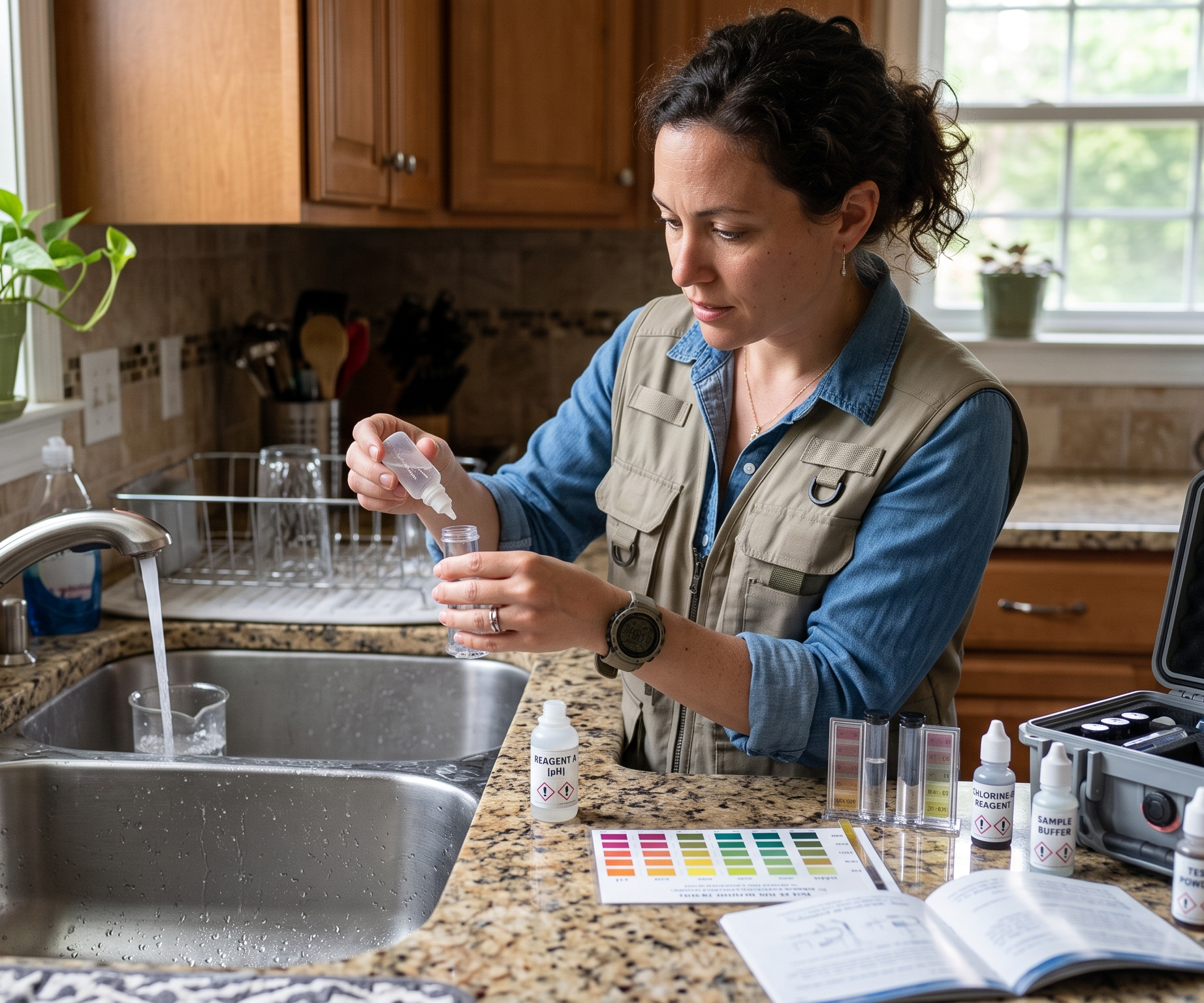
A professional water test tells us exactly what we’re working with. Without it, you’re simply guessing.
A Real Example From One of Our Customers
The Problem
One family moved into a newly purchased home that had no water treatment equipment installed. Within a week, they started noticing several issues:
- A strong rotten egg smell.
- Iron staining building up inside their toilets.
- Calcium spotting all over their glass shower doors.
- Spots appearing on dishes from the dishwasher.
The Solution
After testing their water, we installed an iron filter along with a properly sized water softener.
The results were immediate:
- The rotten egg smell disappeared.
- The iron staining stopped.
- The calcium spotting on the shower glass and dishes was eliminated.
One of the biggest differences came from something many homeowners don’t expect. The homeowner told us she immediately noticed her skin and hair no longer felt dry after bathing.
That’s what happens when you install the right equipment for the water you’re actually dealing with, not just whatever happens to be on sale.
Proper Programming Matters More Than Most People Realize
One thing that rarely gets talked about is programming. Many systems are simply left on their factory settings. That can create several problems.
If Set Too Low
If your water hardness is lower than the factory settings, you’ll use far more salt than necessary and your water may begin to feel slippery or slimy.
If Set Too High
If your water hardness is higher than the factory settings, the equipment has to work harder than it should and won’t perform as efficiently.
Every installation should be programmed specifically for the home’s water test results. That